Venue Histories Driving Multi-Sport Live Accumulator Strategies for Enhanced Bonus Utilization and Performance Analytics

Venue histories provide measurable patterns that anchor live multi-sport wager combinations, allowing bettors to align introductory reward structures with ongoing performance data across tennis, football, and horse racing, and researchers have documented how these records influence match outcomes and race results in specific locations since the early 2000s.
Establishing Venue Data as Core Anchors
Each venue carries its own statistical profile that shapes event probabilities, and observers note that football stadiums with high home-win percentages over five seasons often correlate with stronger accumulator legs when paired with tennis courts favoring baseline players or horse tracks known for speed biases, while data from May 2026 shows continued emphasis on these metrics during major European fixtures and North American racing meets.
Analysts compile these histories from public records and performance databases, creating reference points that reduce variance in multi-leg bets, and this approach integrates well with sign-up incentives because platforms frequently tie welcome bonuses to accumulator volume rather than single selections.
Constructing Cross-Sport Combinations Around Venue Records
Live combinations gain stability when builders select one leg from a venue with documented dominance trends, then layer complementary outcomes from other sports that share timing windows, for example pairing a football team’s strong record at its home ground with a tennis player’s success on similar surface types and a horse’s proven form at a particular track distance, and this chaining method allows users to meet bonus wagering requirements through structured multi-sport tickets.
Platforms release daily insights that highlight venue-adjusted probabilities, enabling bettors to adjust selections in real time as matches progress or races approach the start, and these tools often include filters for current form overlaid on historical venue data so that accumulator builders can identify value shifts before odds adjust.
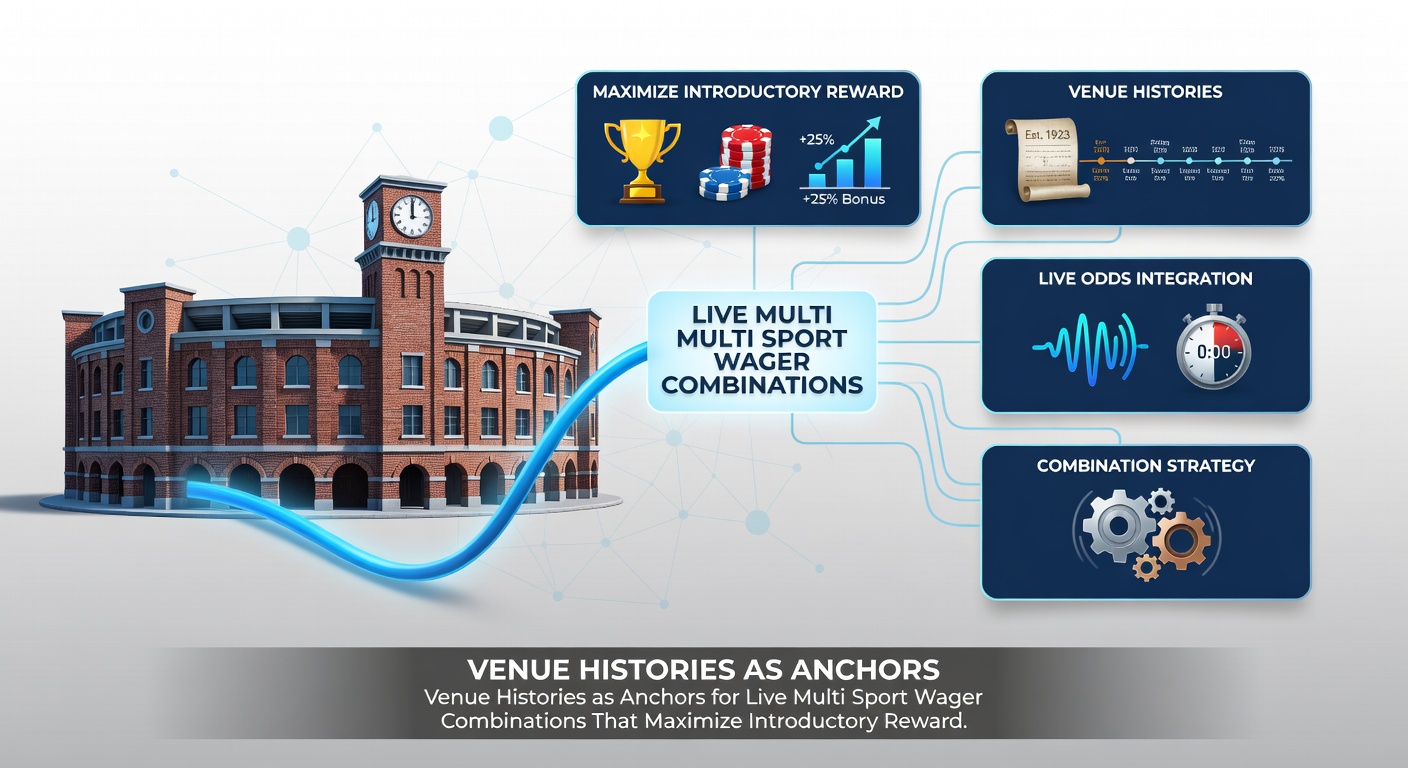
Maximizing Introductory Rewards Through Structured Use
Introductory offers frequently require a minimum number of legs or total stake amount, and those who study venue histories position their combinations to satisfy these thresholds while maintaining statistical grounding, so a welcome free bet might fund an initial accumulator anchored by a high-percentage home venue in football, extended by tennis and racing selections that align with the same evening schedule.
Operators update their reward systems periodically, and reports from the American Gaming Association indicate that players who incorporate venue-specific filters into their bonus strategies show higher completion rates for wagering conditions compared with random selection methods, while similar patterns appear in data released by the Australasian Gaming Council for international markets active in 2026.
Generating Daily Insights from Venue Anchored Analysis
Daily insights emerge when bettors track how actual results compare against venue baselines, and software dashboards now display deviation metrics that flag when live conditions diverge from historical norms, such as unexpected weather effects on a racetrack or surface wear on a tennis court that alters bounce characteristics mid-tournament.
These ongoing measurements feed back into accumulator planning for subsequent days, creating a cycle where each completed ticket refines the next set of selections, and industry research from academic sources including studies published through the MIT Sloan Sports Analytics Conference has examined how repeated application of venue data improves calibration between predicted and observed outcomes across combined sports markets.
Users access these insights through mobile interfaces that refresh with new legs as events unfold, allowing adjustments that protect accumulated bonus value while capitalizing on emerging live edges at familiar venues, and this process operates continuously during peak seasons when multiple sports overlap in scheduling.
Conclusion
Venue histories function as reliable reference points that support both the construction of live multi-sport accumulators and the efficient deployment of introductory rewards, with daily insights derived from ongoing comparison of results against those established records helping maintain alignment between strategy and available data throughout the 2026 calendar.