Mapping Real-Time Decision Patterns from Racquet Sports to Track Competitions in Constructing Multi-Layer Wagers
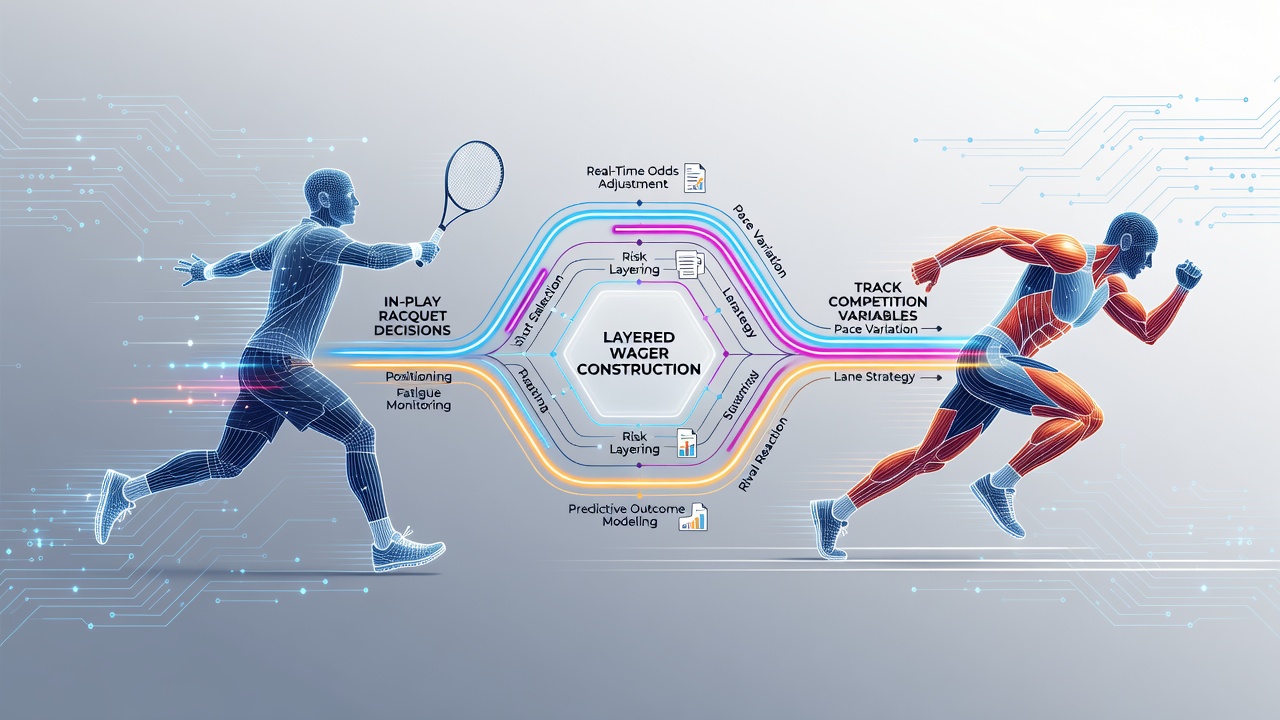
Real-time choices made during racquet sports such as tennis create observable sequences that align with split-second judgments in track competitions including horse racing, and analysts have documented these overlaps to support structured approaches to multi-leg betting constructions. Observers note that both environments demand rapid assessment of momentum shifts, fatigue indicators, and tactical adjustments, while data from performance tracking systems reveals consistent timing windows where such decisions cluster. Researchers at institutions studying sports analytics have mapped these moments across events, highlighting how a single point victory in tennis often precedes similar acceleration phases on the track that influence final outcomes.
Core Elements of In-Play Choices in Racquet Events
During live tennis matches, players evaluate serve placement, return angles, and court positioning within fractions of a second, and these evaluations generate patterns that repeat across sets. Studies tracking professional circuits show that decision density peaks during tiebreaks and service games, where error rates and recovery metrics become measurable. Those who monitor these sequences find that early set dominance frequently correlates with later adjustments in pace and spin selection, creating predictable intervals for wager adjustments. Performance logs from major tournaments indicate that such intervals average between 45 and 90 seconds, allowing layered constructions to incorporate secondary legs once initial conditions stabilize.
Parallel Structures in Track-Based Competitions
Track events like horse racing present analogous decision clusters around gate breaks, mid-race positioning, and stretch runs, where jockey tactics mirror the adaptive responses seen on court. Data collected through timing sensors demonstrates that pace variations in the first half of a race often forecast closing surges, much like early break points in tennis predict set conclusions. Analysts comparing datasets from both domains observe that fatigue thresholds appear at comparable percentages of total event duration, roughly 60 to 70 percent, and these thresholds provide anchors for multi-stage wager frameworks. Events scheduled through July 2026 continue to supply fresh datasets that refine these percentage-based models.
Identifying Transferable Decision Nodes
Mapping exercises connect tennis break-point conversions directly to horse race overtaking opportunities because both represent high-variance moments with elevated outcome influence. Experts have constructed matrices that align rally length distributions with sectional timing splits, revealing that longer rallies in racquet sports correspond statistically to sustained mid-race battles on the track. One study revealed that integrating these nodes into layered wagers increased structural coherence when participants selected three or more sequential conditions rather than isolated outcomes. Observers note that the connections strengthen further when environmental factors such as surface conditions or weather enter the equation, since both sports share sensitivity to these variables at similar decision nodes.
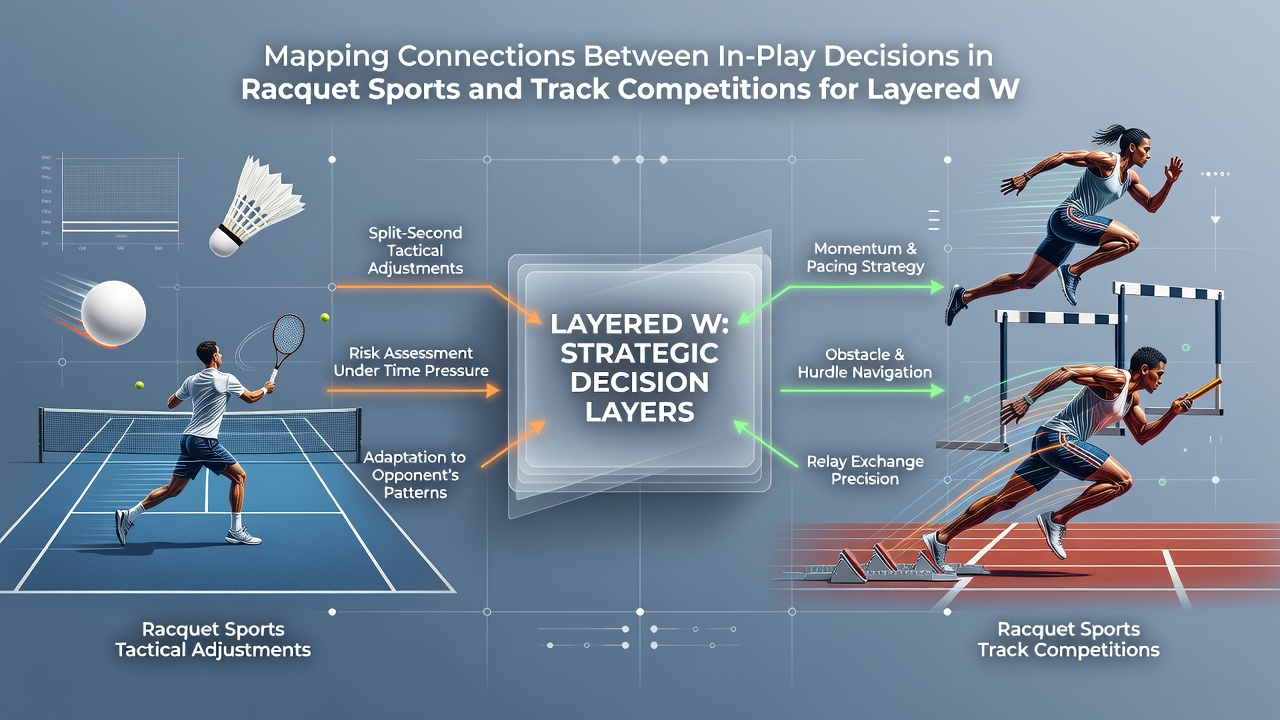
Implementation requires sequential verification steps where initial racquet sport conditions are confirmed before track legs activate, and this sequencing reduces overlap errors according to simulation results published in sports performance journals. Those who apply the mappings report that combining point-by-point tennis data with furlong-by-furlong track metrics produces clearer branching paths for accumulator structures. Regulatory reports from the Australian Communications and Media Authority have documented rising interest in such cross-sport frameworks within licensed markets, noting that transparent data sources improve compliance tracking without altering underlying probabilities.
Practical Construction of Layered Wagers
Layered wager building begins with identification of primary triggers in one domain, such as a tennis player's first-serve percentage crossing a threshold, then extends to secondary confirmation in track segments like final-furlong positioning. Research indicates that successful layering incorporates at least two verification points per leg to account for variance, and timing alignment between sports becomes critical when events run concurrently. Industry analyses from the National Council on Problem Gambling in the United States highlight that structured approaches relying on documented decision mappings show measurable differences in participant behavior compared with unstructured selections. Events in July 2026 are expected to test these alignments further as overlapping schedules increase across international calendars.
Software tools that aggregate live statistics now support automated node detection, allowing participants to monitor multiple conditions simultaneously while maintaining the required sequencing. Data shows that when mappings are applied consistently, the resulting structures exhibit internal consistency across varied event types. Observers continue to track how these methods evolve with new sensor technologies that capture finer decision granularity in both racquet and track settings.
Conclusion
Connections between in-play decisions in racquet sports and track competitions supply a foundation for constructing layered wagers through systematic mapping of timing, variance, and confirmation nodes. Available datasets from multiple jurisdictions demonstrate that these alignments remain measurable across seasons, and continued refinement through 2026 events will likely expand the precision of such frameworks. The approach relies on objective performance indicators rather than isolated outcomes, providing a factual basis for multi-leg structures that integrate both domains.