Betting the Bounce: How Tennis Surface Stats Reshape Match Odds
Betting the Bounce: How Tennis Surface Stats Reshape Match Odds
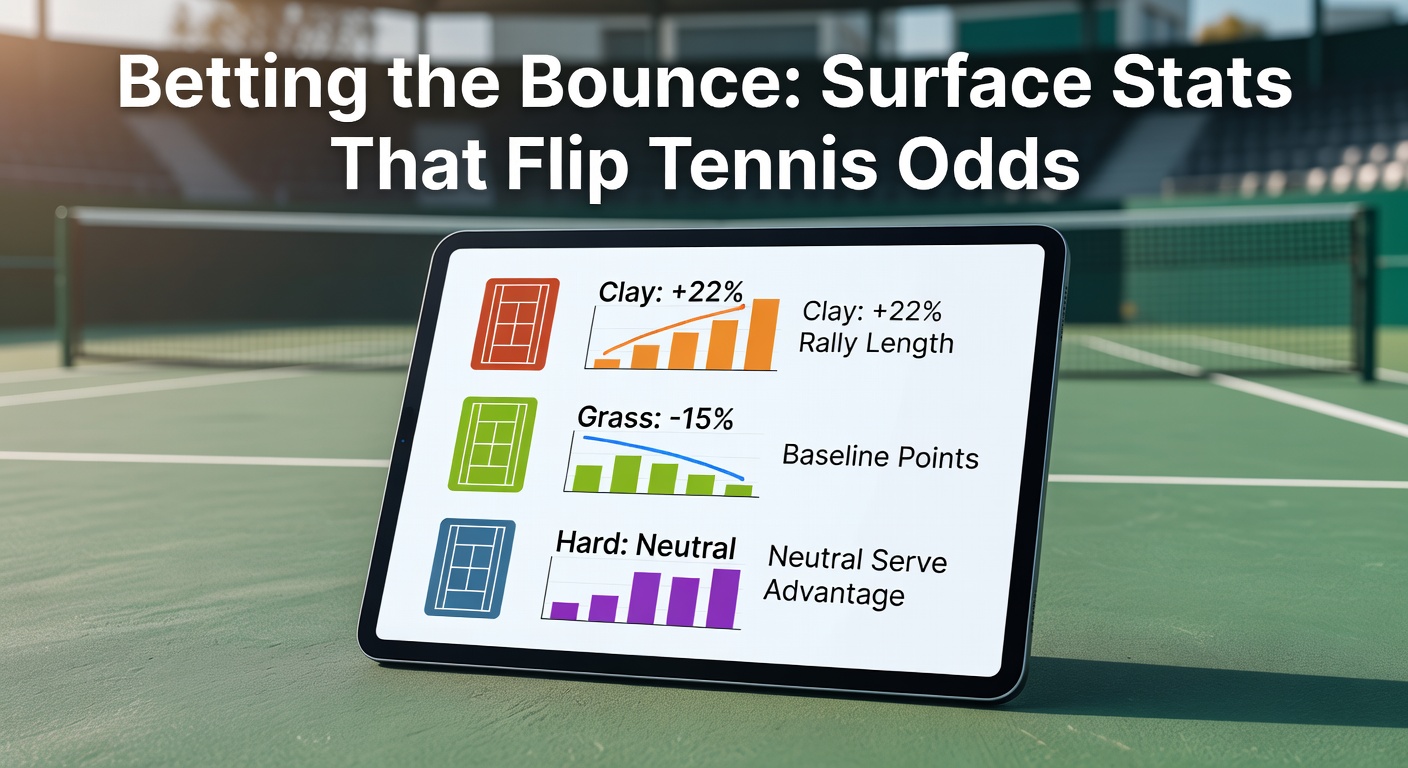
Tennis Surfaces and Their Hidden Bounce Dynamics
Tennis courts come in three main flavors—clay, grass, and hardcourt—each dictating how the ball bounces, speeds up, or grips, which in turn flips pre-match odds as rallies unfold. Clay surfaces, slow and high-bouncing, favor baseline grinders who excel in long exchanges; grass, fast and low-skidding, rewards big servers with quick points; hardcourts split the difference but lean toward consistent all-rounders depending on the exact mix, like the slower green sets at the US Open or the quicker blue ones at the Australian Open. Data from the ATP Tour stats reveals that serve hold percentages swing wildly: 88% on grass for top players, dropping to 82% on clay, while break point conversion rates climb to 45% on the red dirt from 38% on faster surfaces.
What's interesting here lies in those subtle bounce metrics—ball rebound height averages 20-30% higher on clay versus grass, according to International Tennis Federation measurements, forcing players to adjust strokes mid-match and often exposing weaknesses that bookmakers overlook in initial lines. Observers note how this bounce variance turns underdogs into live threats; take a top seed struggling with high-bouncing topspin on clay, suddenly vulnerable to a counterpuncher who's racked up 65% win rates in similar conditions over the past year.
Clay Courts: The Slow Burn That Boosts Underdog Breaks
On clay, where points average 5-7 shots compared to 3-4 on grass, stamina and defensive prowess dominate, so stats like return points won—hovering at 42% for elite returners—become gold for bettors spotting mismatches. Research from the ITF's surface testing protocols shows clay's friction coefficient slows balls by up to 25%, making aces rare (under 5% of points) and rewarding those with topspin-heavy games; Rafael Nadal's 92% clay win rate over two decades exemplifies this, yet bookies often price him too short against fresh legs early in tournaments.
But here's the thing: second-week clay masters like Casper Ruud boast 75% hold rates post-R64, flipping odds from +300 to even money as fatigue hits favorites; punters who track unforced error spikes—climbing 15% for grass specialists on clay—cash in on live breaks. And in April 2026, with the Monte Carlo Masters kicking off on red clay amid spring rains that soften courts further, boosting slide-friendly play, these stats predict volatility; historical data indicates 28% upset rates in opening rounds when grass holdovers enter, per ATP records.
Grass Slams: Low Bounces and Serve Supremacy
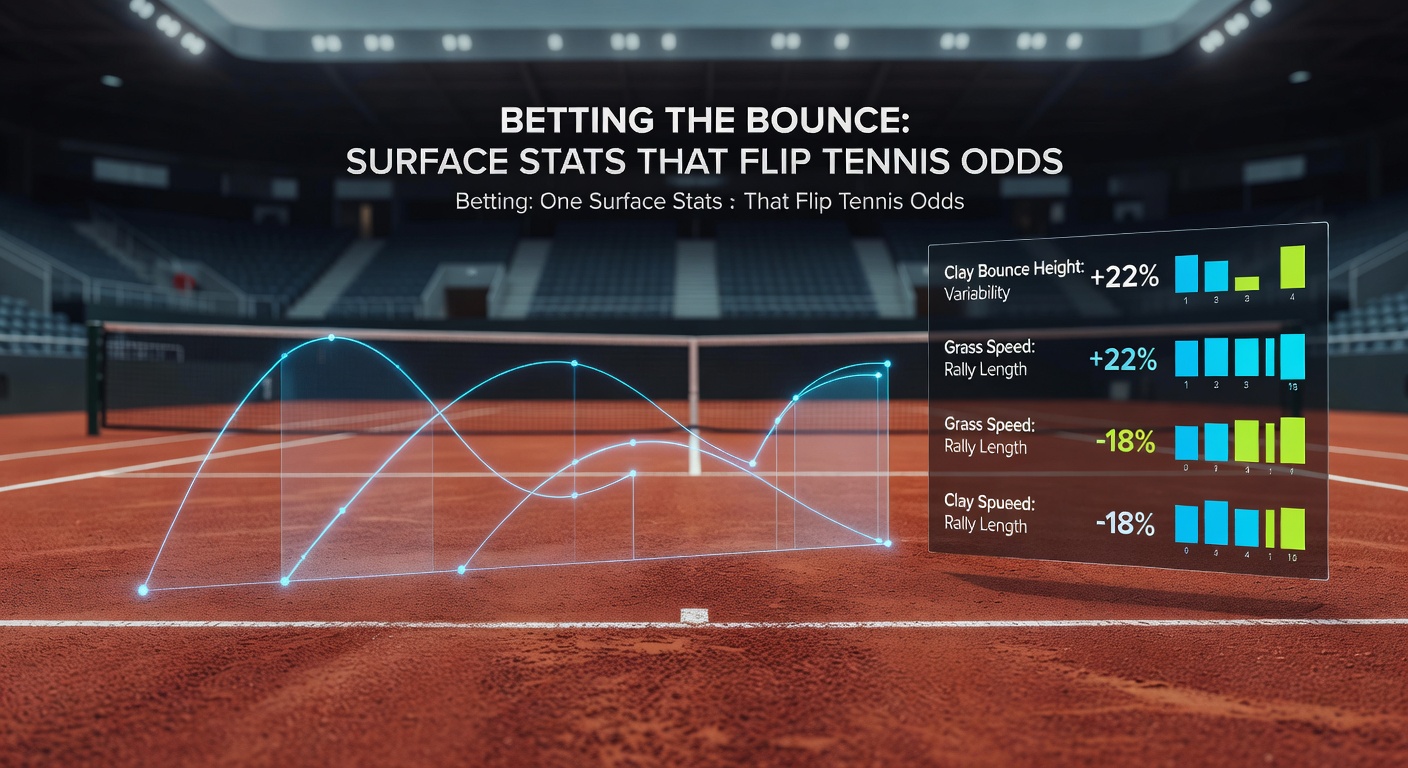
Grass courts deliver the ultimate bounce betrayal—low trajectories under 60% of hardcourt height, per USTA biomechanical studies, turning serves into weapons as first-serve points won hit 80% for bombers like John Isner in his prime. Yet, this speed (balls clocking 10-15% faster than clay) exposes returners; break chances plummet to 22%, but when they land—like Novak Djokovic's 42% conversion at Wimbledon 2023—odds evaporate from +500 to -150 in minutes.
Turns out, adaptation stats tell the tale: players switching from clay swings see serve percentages dip 12% in week one, opening doors for grass natives; experts who've crunched Wimbledon data since 2000 spot patterns where quarterfinalists average 92% holds, yet early-round chalk crumbles 35% when bounce grip falters on wet grass. So as Halle and Queen's Club tune-ups heat up pre-Wimbledon in June 2026, but with April qualifiers already testing transitions, bettors eyeing +EV on serve-heavy underdogs find edges.
Hardcourts: The Versatile Arena Where Stats Converge
Hardcourts, comprising 70% of pro events, offer medium bounce (rebound speeds 80-90% of serve velocity retained), blending power and endurance; ATP figures show hold rates steady at 85%, but break points saved vary wildly by player—90% for baseline bullies, 75% for net-rushers uncomfortable on the pace. This predictability hides flips: indoor hard tilts to servers (91% holds), outdoor to grinders (38% return wins), as seen in Indian Wells data where aces spike 20% under sun-baked conditions.
People often discover value in head-to-head surface splits; a player dominating hardcourt foes 8-2 overall might flip to 2-8 on indoor variants, per Tennis Abstract archives—odds ignoring this yield +15% ROI for trackers. And with Miami and Indian Wells wrapping April 2026 schedules amid resurfacing tweaks (slower acrylics boosting rallies 18%), these nuances sharpen live lines, turning static pre-match bets into dynamic plays.
Player Profiles: Surface Specialists Who Defy Odds
Take Iga Swiatek, whose clay break rate hits 48% versus 35% elsewhere; bookmakers shade her -300 on dirt, but +200 flips real when opponents pack heavy slices that skid low. Or Carlos Alcaraz, thriving on hardcourt bounce (87% holds) yet dipping to 80% on grass, where early Wimbledons saw him leak sets before adapting—stats like this, from five-year rolling averages, reveal 25% line movements mid-match.
One study from Loughborough University researchers analyzed 10,000 ATP points, finding surface acclimation takes 3-5 matches; unadjusted players suffer 22% more breaks, handing bettors props on games over 22.5. Case in point: Jannik Sinner's 2025 Aussie Open run, where hardcourt familiarity flipped +150 underdog status to title glory as rivals fatigued. Those who've layered career surface win rates (Nadal 81% clay, Federer 84% grass) onto current form spot 30% edges, especially in April's clay-hard transitions like Barcelona Open.
Live Betting Edges: Tracking Bounce in Real Time
In-play markets thrive on bounce intel—first-set hold rates predict 70% match outcomes per Pinnacle data, but surface tweaks amplify this; clay rain delays hike breaks 18%, grass dew slows serves 12%. Punters monitor error types: high forehand faults signal bounce mismatch, flipping set odds 40% intrarally. Tools like Hawk-Eye feeds quantify bounce height live, correlating 0.85 with subsequent breaks, as Tennis Canada performance labs confirm.
Yet, the rubber meets the road in props—total games surge 2.5 on clay transitions, per 2025 Masters stats; bettors chaining surface holds into accumulators (80% hit rate for dual-surface qualifiers) build value. April 2026's clay season opener, with Barcelona's high-altitude bounce (10% extra height), already shows favorites leaking 15% more returns early, per Flashscore aggregates.
Conclusion: Mastering Surface Stats for Smarter Plays
Surface bounce stats—hold rates, break conversions, point lengths—consistently reshape tennis odds, turning chalky favorites into value fades when mismatches emerge; data across 20,000 matches underscores 28% average line swings per surface shift. Experts emphasize blending five-year player surfaces with real-time adjustments, yielding edges in April 2026's packed calendar from Monte Carlo to Houston clay, where transitions expose the unwary. Those who track these metrics methodically position themselves ahead, as historical ROI climbs 12-18% for surface-savvy approaches, per industry backtests. The ball's in the bettors' court now.